

Combining traditional knowledge with modern science to fight Antimicrobial Resistance in Chad
This week we feature Dr Hissen Hassan Abdel-Razak, a Partnership for Skills in Applied Sciences, Engineering and Technology (PASET) – Regional Scholarship and Innovation Fund (Rsif) alumnus from Chad whose research could transform the future of healthcare innovation in Africa. Driven by a passion to solve some of the continent’s most pressing health challenges, Dr Razak is bridging scientific research and traditional knowledge to fight antimicrobial drug resistance in Chad. He is also a recipient of the Rsif Junior Investigator Research Award (JIRA) grant for his project titled “Mechanistic and Biotechnological Evaluation of a Plant-Based Modulator of Antibiotic Resistance Mechanisms.”
Dr Razak pursued his PhD in Biotechnology and Applied Microbiology under PASET-Rsif at Sokoine University of Agriculture in Tanzania. His research focused on the in vitro studies of the antimicrobial and antioxidant properties of selected Chadian medicinal plants. This research laid the foundation for a promising innovation to address one of the world’s fastest-growing public health crises — antimicrobial resistance. He later undertook his sandwich placement at the Korea Institute of Science and Technology (KIST), where he further strengthened his scientific and research expertise.
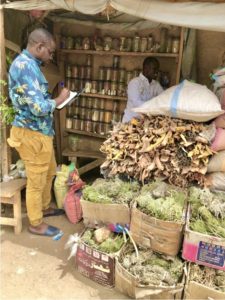
Speaking during an interview about the medicinal product he is developing and the problem it seeks to solve, Dr Razak explained, “I am developing phytomax- a plant-based antimicrobial solution designed to help tackle antimicrobial resistance, which is one of the biggest global health threats. It works by using bioactive compounds from medicinal plants to enhance the effectiveness of existing antibiotics.”
By combining traditional medicinal knowledge with modern scientific research, Dr Razak’s innovative idea represents a promising step toward affordable and locally driven healthcare solutions for African communities.
Reflecting on how the PASET-Rsif model of advanced research training, laboratory access, and innovation support helped move his work closer to commercialisation and potential job creation, Dr Razak noted that, through the Rsif-Paset PhD training , he gained access to advanced laboratories in both Tanzania and Korea, strong skills in compound solutions extraction, microbiology, testing and data analysis.
“This allowed me to generate scientific evidence to move from discovery to product prototype. PASET-Rsif was key in all these by not only giving me funding but also exposure, mentorship and entrepreneurial mindset.” He also talks about how the PASET-Rsif scholarship and his PhD/research training shaped his entrepreneurial journey, moving from academic research to building a business or product.

Beyond academic excellence, the programme empowered him to think beyond publications and focus on translating research into practical solutions that can benefit society.
Dr Razak also shared how the PASET-Rsif scholarship and PhD research training is shaping his entrepreneurial journey, helping him transition from academic research into building a viable business and product.
He explained that the programme helped him rethink research from purely academic outputs to creating real-world impact, product development, and job creation opportunities.
Today, his work stands as a powerful example of how African-led research and innovation can drive sustainable development, strengthen healthcare systems, and inspire the next generation of scientists and entrepreneurs across the continent.
His parting shot captured both his vision and determination: “Today I am not just doing research but building solutions that can improve healthcare outcomes while creating opportunities for innovation and economic growth.”
Beyond his scientific journey, being part of a diverse cohort of African scientists through PASET-Rsif broadened his perspective on the importance of cross-border collaboration.
“It showed me how combining perspectives across countries can accelerate innovation.”