
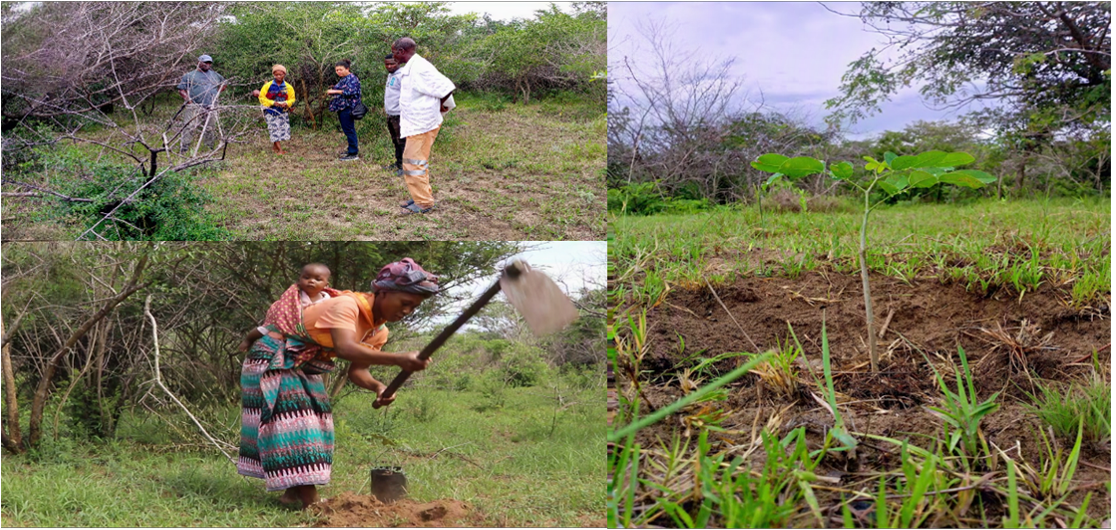
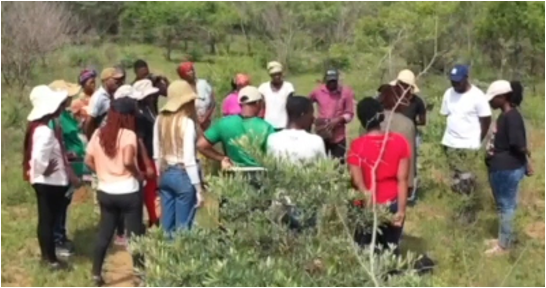
The world recently marked the International Day for the Preservation of the Ozone Layer under the theme “Global action for a cooler planet.” In Mozambique, the Vitroflora project at Eduardo Mondlane University is responding to this call by using plant tissue culture to advance practical forest restoration. Funded by the Government of Mozambique’s Ministry of Education and Culture through the Partnership for Skills in Applied Sciences, Engineering and Technology (PASET) Regional Scholarship and Innovation Fund (Rsif), the project is multiplying native, high-value tree species to restore landscapes degraded by deforestation, charcoal production and timber extraction. According to Sharma and Sharma, in their study “Deforestation Impact on Ozone Layer Depletion,” deforestation can have implications for the ozone layer and the broader atmospheric environment. This is because it contributes to climate change and increased greenhouse gas emissions by releasing stored carbon into atmosphere.
The project also demonstrates how investments in research, innovation and supportive policy environments can translate scientific advances into practical solutions for climate resilience and sustainable development. It falls within PASET-Rsif’s climate change priority area, which supports research focused on environmental adaptation, mitigation and resilience. The work also aligns with the environmental research expertise of the International Centre of Insect Physiology and Ecology (icipe), which serves as the Regional Coordinating Unit for PASET-Rsif.
Policies to sustain research
At the heart of this restoration is Prof Celia Martins, a lecturer at Eduardo Mondlane University, and her team are protecting not only native species of trees but also the ecosystems and communities that depend on them.
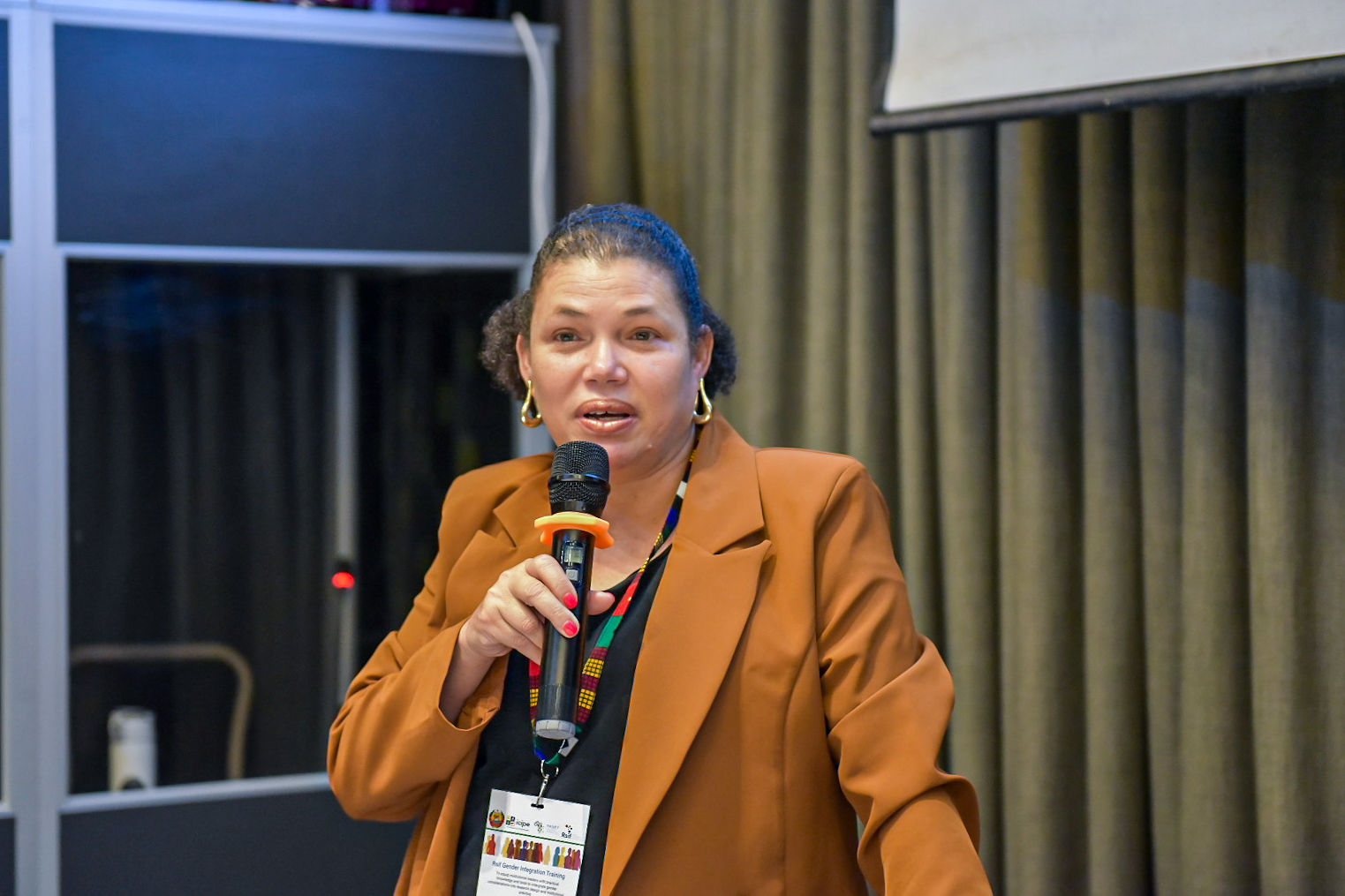
She explains that native plant species are integral components of living ecosystems, with each species contributing to ecological integrity and maintaining the balance necessary for local communities to benefit from the ecosystem services provided by healthy and functioning forests. “These services include honey production, the collection of native wild mushrooms, medicinal plants, and the sustainable harvesting of small mammals that depend on the ecological balance of forest ecosystems. Native forests also play a critical role in maintaining the hydrological cycle, regulating water availability, and contributing to clean and healthy atmospheric conditions,” Prof Celia noted. This also demonstrates to the importance of policies that sustain research infrastructure, support community-led conservation and enable locally developed solutions to scale beyond individual projects.
According to the World Health Organisation (WHO), our planet and health are inextricably interlinked. This therefore means the connection between healthy forests and community wellbeing extends beyond the walls of laboratories of Eduardo Mondlane University – the Vitroflora project has taken restoration from research to the fields.
However, turning native forest restoration into a sustained effort goes beyond just planting seeds, it needs scientific infrastructure to produce and maintain them.
Plant tissue culture
Prof Celia points out that access to plant tissue culture technology and supporting infrastructure—such as the installed generator— has enabled the laboratory at Eduardo Mondlane University to operate fully and without interruptions. “This investment not only supports the maintenance and continued development of the plantlets produced through the project but also establishes a robust platform for research and teaching in Plant Physiology and Plant Biotechnology, particularly in the field of plant tissue culture involving a wide range of species of scientific, ecological, and economic interest.”
She adds that, the strengthened laboratory infrastructure creates opportunities for entrepreneurship and the generation of internal revenue, which can contribute to the long-term sustainability of the laboratory’s activities and support the continuity and expansion of its research, training, and related initiatives.
For the project to move from a promising research initiative to a lasting restoration effort, it needed more than technology—it needed people with the skills and partnerships to put that technology to work. Prof Celia explained that beyond investing in infrastructure, the project also entailed capacity building – giving researchers, students and the community opportunities to develop skills that would carry the work forward.
Institutional capacity
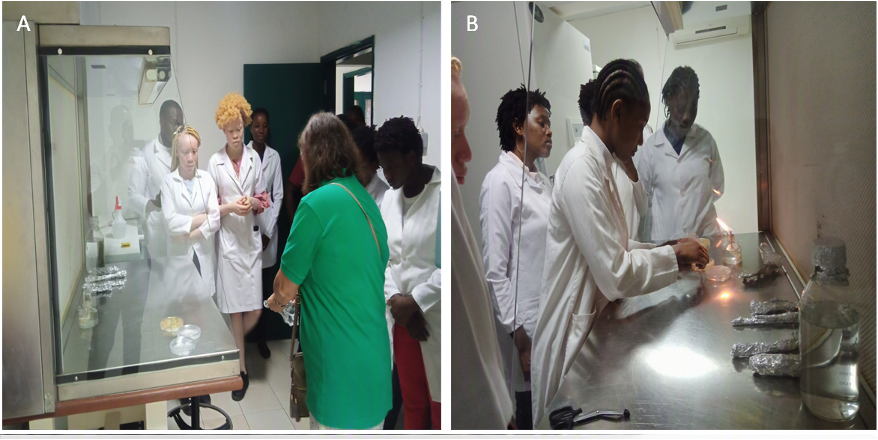
Prof Celia also revealed that the PASET-Rsif grant facilitated access to and collaboration with experts in plant tissue culture from the University of Lisbon, Portugal including their visit to Mozambique to provide training to students and staff of the Department of Biological Sciences in plant tissue culture techniques and applications. “It also supported the participation of researchers from Eduardo Mondlane University in exchange visits and training at the University of Lisbon, thereby promoting knowledge and experience sharing and strengthening institutional capacity,” she added.
Prof Celia pointed out that the grant supported the development and production of technical materials, including a manual on plant tissue culture, a separate manual on biosafety, and a brochure documenting the native plant species produced through the project. “These resources provide valuable reference materials for research, teaching, training, and the continued application of plant tissue culture and conservation practices,” she emphasised.
Value chains
With the foundation laid, and laboratory, expertise and partnerships gain in place, the next question is how far the project would go beyond the grant period to what could be achieved at a larger scale. To this, Prof Celia emphasised that the project would aim to increase the production of native plant species to approximately 3,000–4,000 plants, including additional species of ecological and medicinal importance.
She added that the project would also focus on developing value chains within the communities where they work, enabling local communities to continue conserving forest ecosystems while deriving direct and sustainable benefits from the resources.
“Furthermore, the expansion would extend the project’s activities to other regions of the country, particularly the central region of Mozambique, to broaden the geographical scope of native species restoration and strengthen community-based forest conservation efforts, “she stated.
By combining strengthened laboratory infrastructure, specialised research skills, community-based planting and an enabling policy environment, the project is contributing to the broader environmental action needed for a more climate-resilient and healthier planet while highlighting the importance of policies and systems that enable locally driven research and forest-restoration solutions to be sustainable. All these bring the theme of this year’s International Day for the Preservation of the Ozone Layer, “Global action for a cooler planet,” closer to the ground in Mozambique.