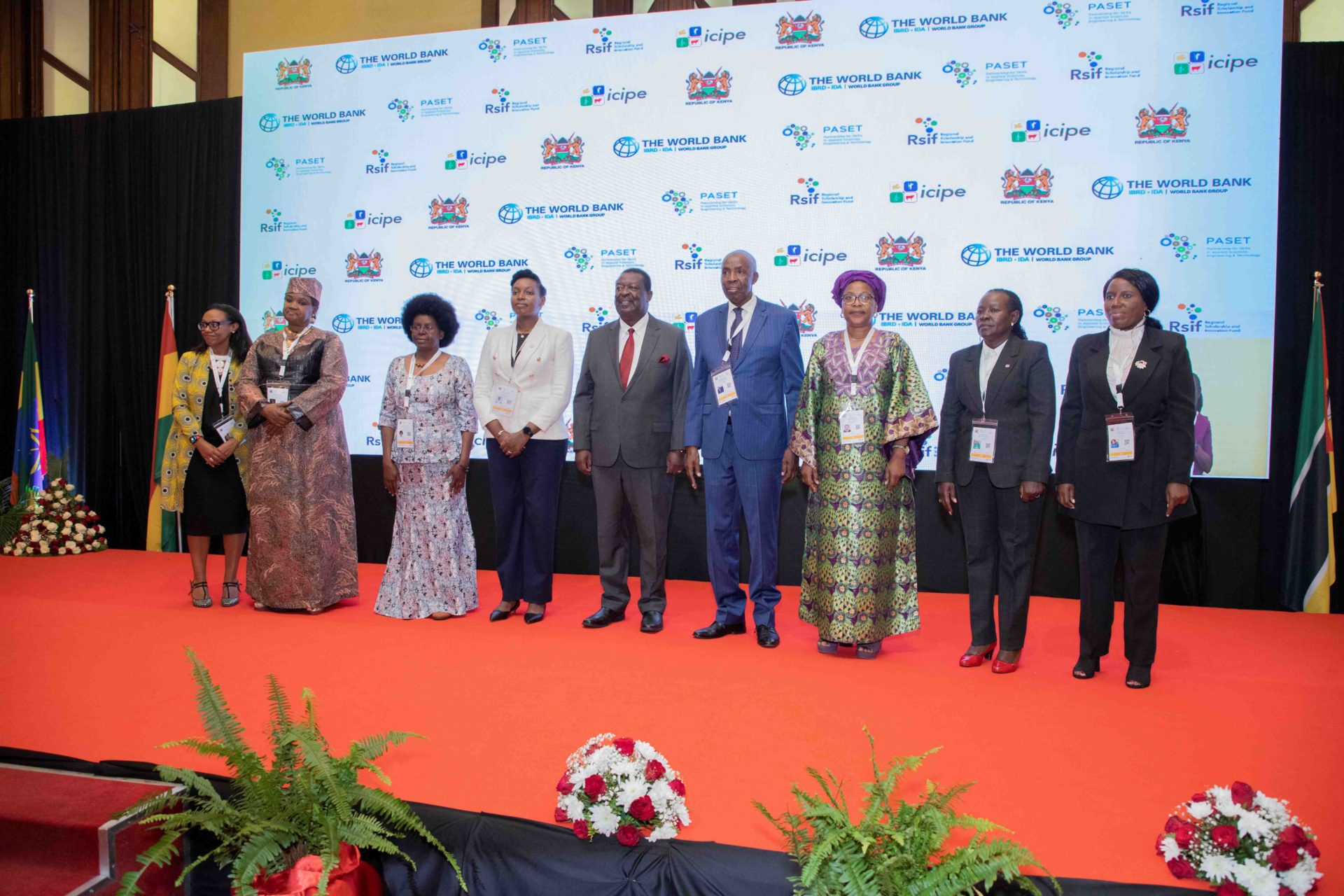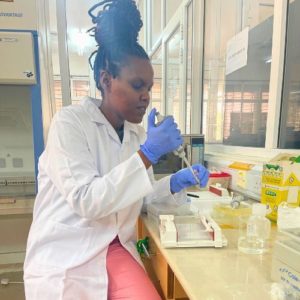

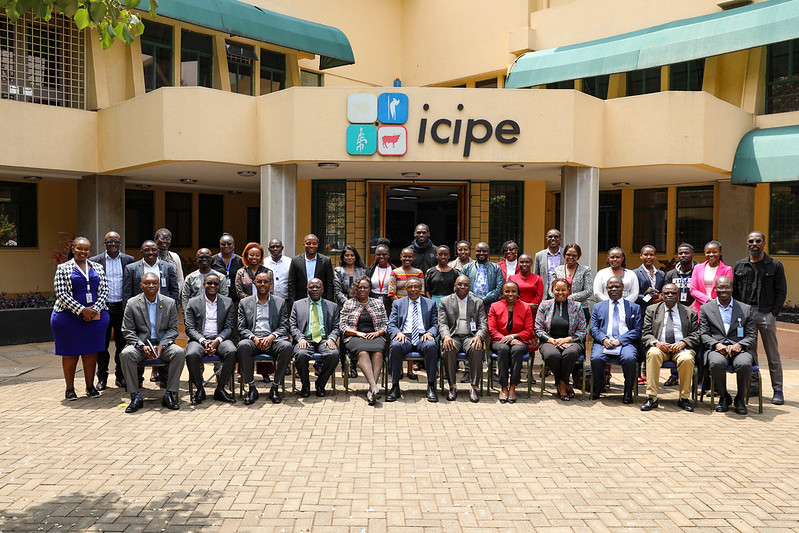
Nairobi, Kenya – Eight Vice Chancellors of leading universities in Kenya visited the International Centre of Insect Physiology and Ecology (icipe) Duduville campus in Nairobi on 25 July 2024. The universities represented were: University of Embu, Meru University, Riara University, Daystar University, University of Nairobi, South Eastern Kenya University (SEKU), Masai Mara University, and Rongo University of Science &Technology. The Vice Chancellors were on a study tour to discuss scientific training, research and commercialisation of research outputs, with emphasis on technology transfer processes. The visit was facilitated by the Kenya National Innovation Agency (KeNIA), a government parastatal established by the Science, Technology, and Innovation (STI) Act, No. 28 of 2013.
This visit underscores the critical role of research and technology transfer in addressing national development challenges. Research and technology transfer are essential for driving innovation, economic growth, and societal progress. Research generates new knowledge and understanding, while technology transfer bridges the gap between the laboratory and the marketplace. By transforming research findings into practical applications, technology transfer facilitates the creation of new products, services, and industries, ultimately improving people’s lives. Additionally, technology transfer creates a cycle of innovation collaboration between academia and industry, and fosters an environment where scientific advancements improve the quality of life and socio-economic transformation.
Dr Abdou Tenkouano, the Director General of icipe welcomed the Vice Chancellors to icipe, and emphasised the crucial role universities play in the research and development space. He highlighted the universities’ contribution to knowledge generation and the potential to empower the youth through start-ups based on research outputs. He encouraged the Vice Chancellors to go and tell others about what they have seen at icipe, and invited the universities to explore more collaborations with icipe in research and capacity building for the next generation of science leaders. icipe implements capacity-building programs, such as the African Regional Postgraduate Programme in Insect Science (ARPPIS) and the Dissertation Research Internship Programme (DRIP) in producing science leaders, which the Vice chancellors appreciated. icipe currently hosts several postgraduate students from Kenyan universities in these programmes, including 40 students (22 of whom are women) from the universities that visited.
Professor Daniel Mugendi, Chairman of the Vice Chancellors’ Committee and Vice Chancellor of the University of Embu, commended icipe’s research excellence and success in commercialization. He stressed the need for universities to adopt similar practices to enhance their technology transfer processes and evolve into entrepreneurial centers of excellence. The Vice Chancellors appreciated the significance of Intellectual Property (IP) policies in promoting research commercialization, and emphasised the need for universities to explore various IP rights options and alternative commercialization channels like technology licensing.
A highlight of the visit was the mixed-method approach employed to help guests appreciate icipe’s entire research pathway to commercialization. The event featured a mini-exhibition showcasing icipe’s research products in biopesticides, Insects for Food and Feed (INSEFF), bees, and silk; followed by a high-level presentation highlighting icipe’s research outputs in various health themes, including Animal, Environmental, Plant, and Human health. Other capacity-strengthening initiatives under icipe like the Regional Scholarship and Innovation Fund (Rsif), which collaborates with universities in and outside of Africa to support the training of PhD and MSc students, and the BioInnovate Africa Program, which supports researchers in building entrepreneurial skills and commercializing their research outputs, were highlighted.
The Vice Chancellors’ visit to icipe shows a commitment by Kenyan universities to drive innovation and address national challenges through research and technology transfer. The Vice Chancellors acknowledged the need to create enabling environments for research and innovation within their respective universities, especially by strengthening their Technology Transfer offices.
Key recommendations were that universities should update Intellectual Property policies, ensure research is value-driven, explore private sector partnerships, offer entrepreneurial training, engage with policymakers, and enhance procurement and operational efficiencies. On the side of icipe more community and stakeholder engagement to broaden its impact was suggested. These steps aim to foster a vibrant innovation ecosystem in Africa, strengthen collaboration between research institutions and government agencies, and contribute to Africa’s economic growth and social progress.
This visit serves as a catalyst for future partnerships and knowledge exchange, positioning Africa at the forefront of scientific advancement and development.