

Why PhD skills are important for Africa’s industrialisation: An African CEO’s perspective

Across Africa, industry leaders are increasingly clear about one thing: machines alone will not transform the continent’s economies—people will. In a series of interviews with CEOs and entrepreneurs, stakeholders from the private sector highlighted the urgent need for advanced skills, PhD-level research, and innovation capacity to solve complex technical challenges and reduce dependence on imported expertise.

Their message strongly aligns with the mission of the Partnership for Skills in Applied Sciences, Engineering and Technology (PASET) Regional Scholarship and Innovation Fund (Rsif): building a highly skilled workforce capable of driving industrial competitiveness, strengthening local value chains, and turning African research into practical solutions for Africa’s development.

Here is part one in the series of interviews we did with industry leaders on the matter. We interviewed Ghanaian entrepreneur Patricia Poku Diaby, the Executive Chair of PLOT Enterprise Ghana Limited and PLOT Enterprise SA in Côte d’Ivoire – a modern state-of-the-art cocoa processing company. Patricia is to date, the only woman in Africa to establish a large-sized cocoa processing business.

Q: Please give us a brief overview of your company

A: PLOT Enterprise (GH) Ltd established in 2010, is a Cocoa Processing facility, located in Takoradi, in the Western Region of Ghana where about 60% of Ghana’s cocoa is produced.

At PLOT, we differentiate ourselves by adding “more value” to the Cocoa bean with state-of-the-art equipment and a process line that boasts one of the finest technologies.

We operate to the highest standards, processing our beans into cocoa liquor or mass as its called in Europe, cocoa cake, cocoa butter (natural or alkalized), powder and more recently, chocolates and a chocolate drink.

Every product undergoes a meticulous process that reflects our unwavering commitment to excellence, while remaining attentive to evolving consumer trends. 

Q: Can you share an example of how investing in advanced skills—such as technical training, research capacity, or innovation—has directly improved productivity, reduced costs, or enabled your company to develop new products or services?

A: I always say that a processing plant without skilled people is nothing more than a stranded asset and that is why our most consistent investment is in cultivating the specialized skills essential for modern trade.

In manufacturing, machines process beans, but it is leadership that “process” the systems. This is why advanced skills – at the postgraduate level, what we call the ‘invisible infrastructure’ – are indispensable.

PLOT Enterprise’s journey reveals that the true barriers to value creation aren’t just the machines or equipment, they are institutional and human.

We therefore made it a point to invest in training and capacity-building for our employees, thus enhancing their skills and knowledge, creating a stronger talent pool.

For companies like PLOT, innovation comes naturally in how we operate and grow. Our question is simple: How do we create value where others see limits? This has driven our entire strategy, not just in manufacturing, but on the value chain.

Take our by-product innovation strategy as an example. Traditionally, cocoa shells and husks were treated as waste, costly to dispose of and environmentally burdensome. But through strategic partnerships, we have found ways to repurpose these by-products into viable, income-generating solutions:

Cocoa shells are now converted into biomass energy, helping power parts of our operations and reducing reliance on fossil fuels.

The cocoa husks are processed into organic bio-fertilizers, yielding sustainable agriculture and rural farm economy inputs.

These are not green concepts alone — they also unveil new value chains in their entirety, facilitating employment in energy, agriculture, and circular economy ventures. In essence, we are building wealth from waste while creating new industries through research and advanced skills.

This kind of forward-looking vision is what powers African agro-industrial companies to shift from survival to competitiveness on the world stage. But intention is not enough to unlock this potential to its maximum, we need an enabling environment that encourages innovation through funding tools, R&D incentives, and avenues for industry, academia, and government partnerships.

Q: If you were advising governments and development partners like the World Bank, what would you say is the economic cost of underinvesting in higher education and advanced skills—and what impact could stronger investment have on job creation and Africa’s industrial and economic transformation?

A: Underinvesting in higher education and advanced skills for Africa’s manufacturing sector carries a heavy economic cost: factories remain underutilized, productivity declines, and countries are forced to import both expertise and higher-value goods. By contrast, stronger investment in research institutions and in applying learning outcomes would raise competitiveness, create skilled jobs, and accelerate Africa’s industrial transformation.

As I reflect on our processes and operations, it is clear that true expertise resides in the scholar’s skill set. To unlock this expertise, sustained support must be provided to allow researchers to apply their knowledge and problem-solving abilities. Such investment is not a cost but a catalyst—transforming human potential into industrial innovation, strengthening local value chains, and reducing reliance on imported expertise. Funding in this area directly translates into measurable gains for industry and long-term economic growth.

Q: What role do universities and PhD-level research play in solving real industry problems in your sector, and how could stronger partnerships between higher education and industry accelerate innovation, strengthen local value chains, and reduce reliance on imported expertise?

A: Because they generate applied knowledge, Universities and PhD-level research are critical for solving real manufacturing problems. Africa’s manufacturing competitiveness depends on turning universities into engines of industrial innovation. PhD-level research provides the deep expertise needed to solve technical challenges, while partnerships ensure that knowledge flows into factories, strengthens local value chains, and reduces reliance on imported solutions. The benefit of training advanced talent, and provision of innovation capacity is something that industry alone cannot sustain.
A clear example of such benefits is when we installed a tempering machine. By combining the expertise of our in-house research graduates with the manufacturers, we were able to completely redesign the system.  The benefit of training advanced talent, and provision of innovation capacity is something that industry alone cannot sustain.
 

icipe hosts delegation of Vice-Chancellors and Deans from across Africa

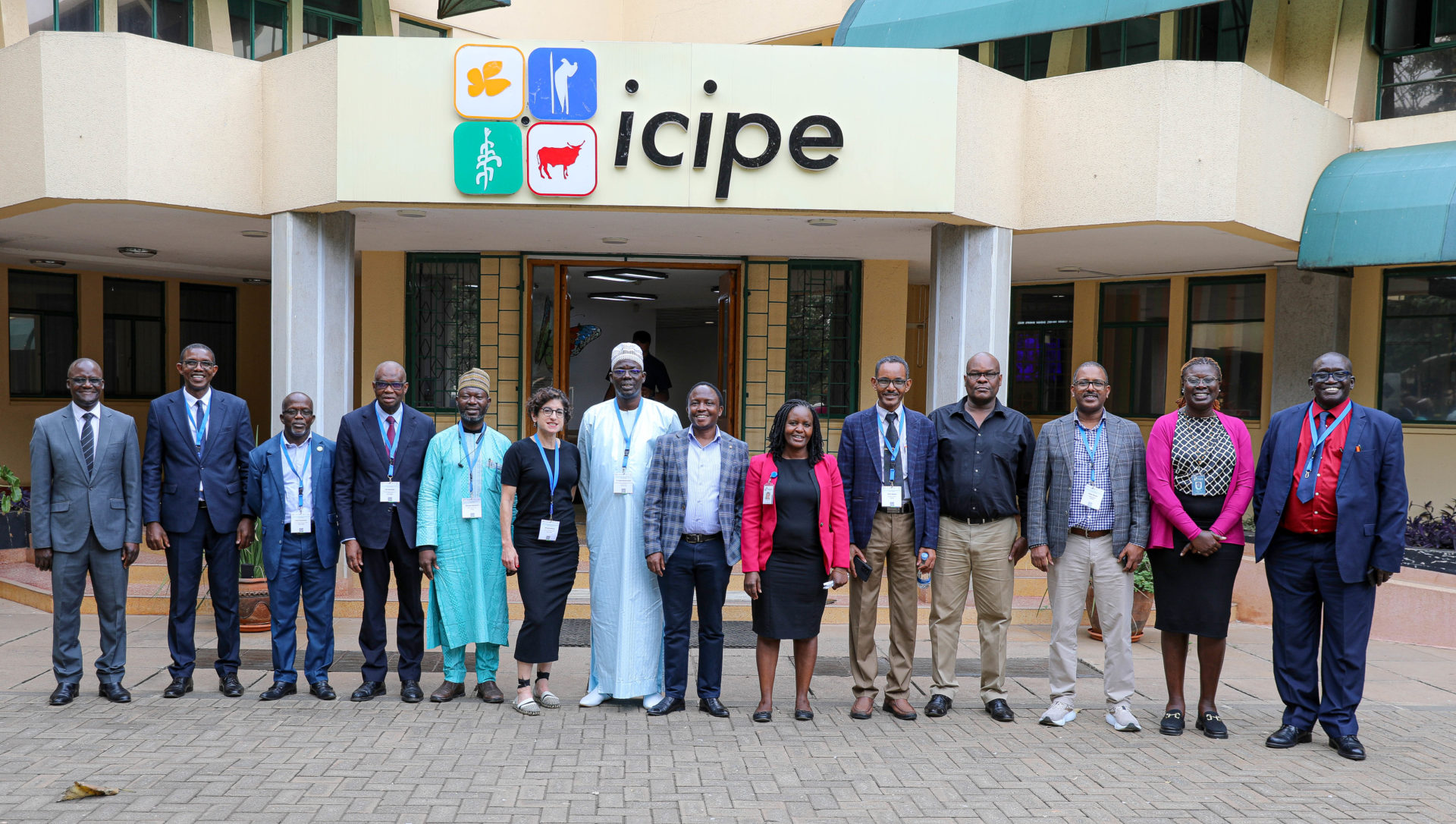
A delegation of 10 Vice-Chancellors (VCs), Deans and their representatives from across Africa visited the International Centre of Insect Physiology and Ecology (icipe) Duduville campus. The VCs were of the Partnership for Skills in Applied Sciences, Engineering and Technology (PASET) Regional Scholarship and Innovation Fund (Rsif) African Host Universities (AHUs).

PASET-Rsif has a network of 15 AHUs that offer PhD programs in five priority thematic areas namely, ICT including big data and artificial intelligence, food security and agri-business, minerals, mining and materials engineering, energy including renewables and climate change.

This visit which was on the sidelines of the PASET Governance Meetings and High-Level Policy Dialogue,  aimed at strengthening the ongoing collaboration and showcasing icipe’s cutting-edge research that underpins the Rsif model.

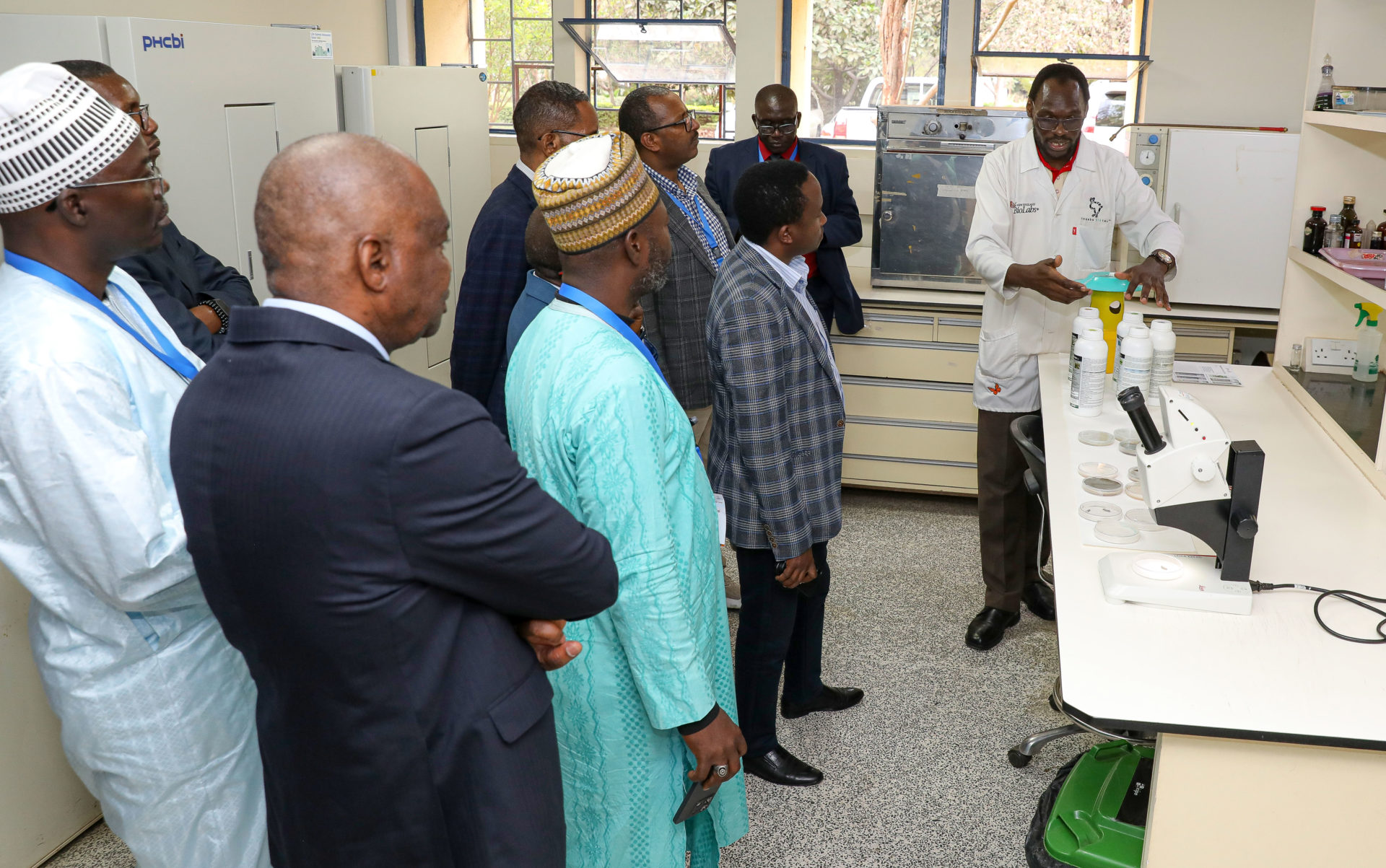
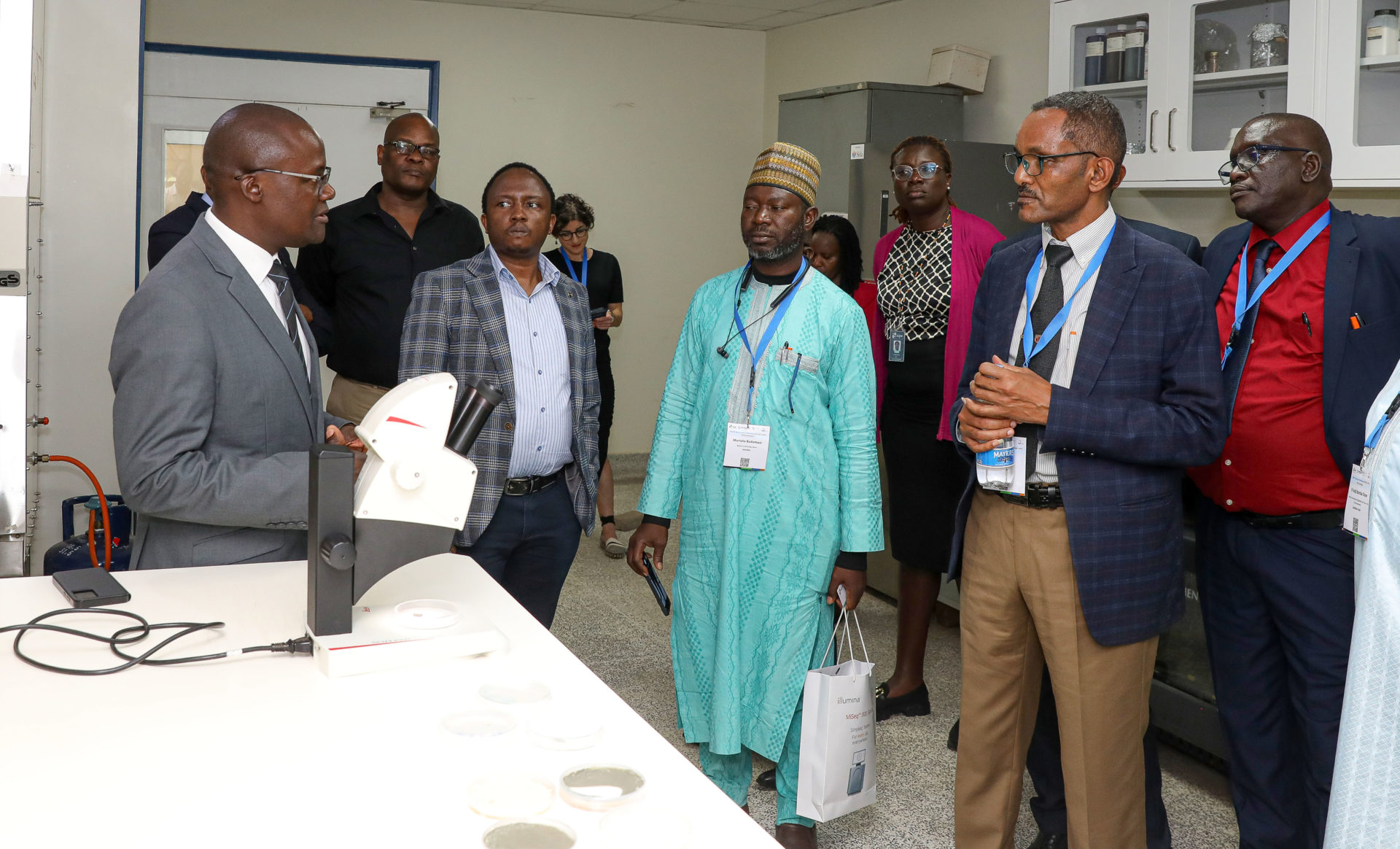
Dr Takemore Chagomoka (L), the head of Scaling and Business Acceleration unit at icipe talks to some of the members of the delegation who visited the centre. Photo/Brian Mwashi
Dr Takemore Chagomoka (L), the head of Scaling Innovation and Business Acceleration unit at icipe talks to some of the members of the delegation when he received them at the centre. Photo/Brian Mwashi

Human capital development remains critical in Africa to provide relevant and important skills, especially the youth who form the biggest percentage of Africa’s social group. The visit by the VCs from various African countries and universities to icipe underscores the Centre’s contribution to Africa’s human capital development.

The visit offered the VCs a front row seat to icipe’s best practices in research and innovation in three key laboratories: the Bee Health, the Chemical Ecology, and the Biopesticides. They were impressed by the state-of-the-art equipment and world-class research and noted that icipe provides valuable lessons on how an African research institution can set global benchmarks.

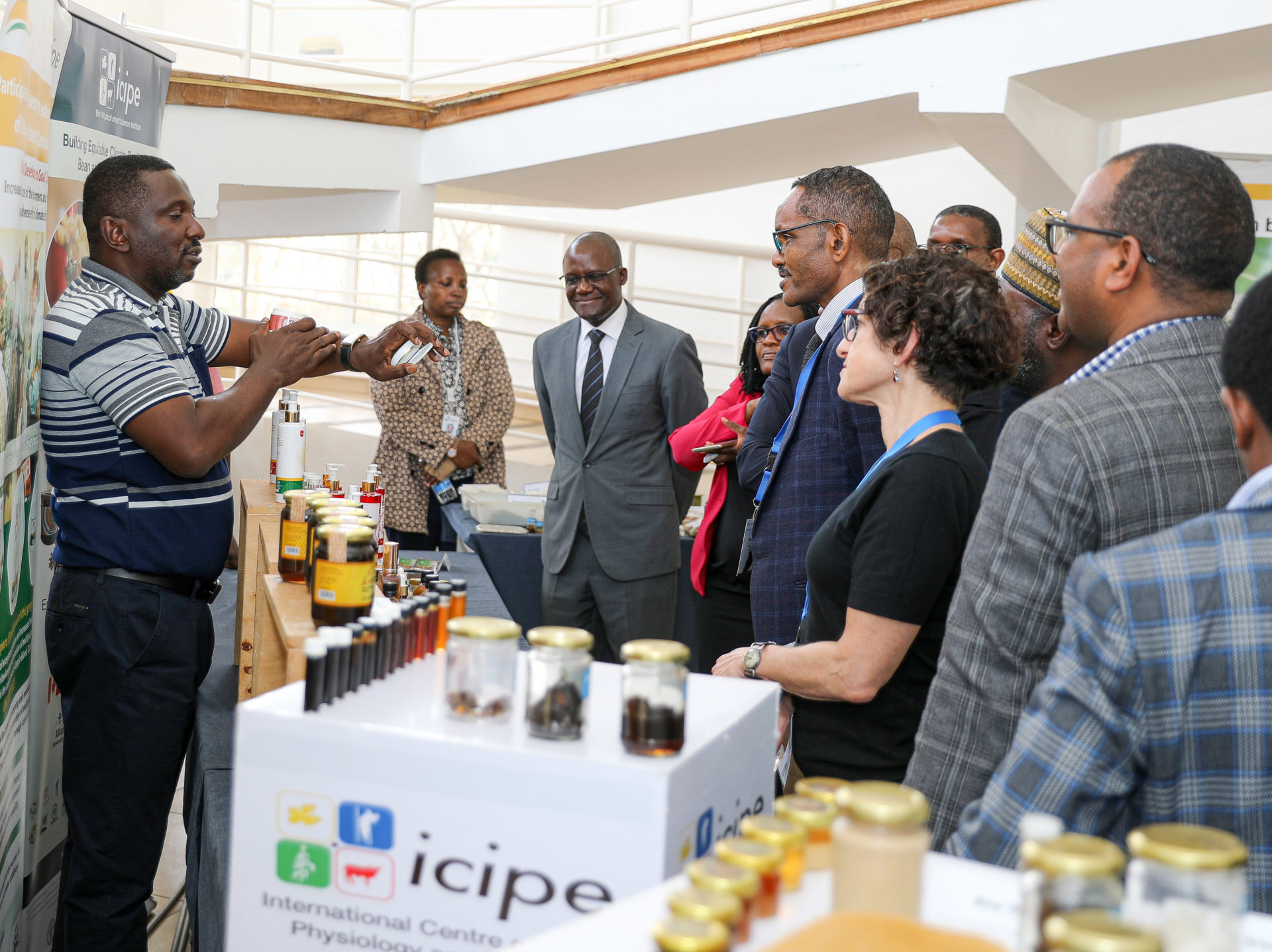
The delegation at the bee health
Dr Nkoba Kiatoko, research scientist, Environmental Health Theme icipe
talking to the delegation at the Africa Bee Health Reference Laboratoty. Photo/ Brian Mwashi

At the Bee Health Laboratory, they observed how honey can be diversified into a range of products. This underscored the potential for creating additional income streams for farmers through value addition.

The delegation also observed how icipe translates its high-quality research into registered and commercialized products and intellectual property, illustrating how science can generate both social impact and revenue.

The visit highlighted icipe’s structured approaches for ensuring that technologies and innovations reach farmers and wider society, bridging the gap between research and practical application. They gained insight into icipe’s protocols for receiving and analyzing samples, with an emphasis on material transfer compliance — a key safeguard for scientific integrity.

Arthropod Pathology unit at icipe
Levi Ombura, research assistant taking the delegation through the process of Biopesticide research and commercialization

They also learned about icipe’s procedures for managing laboratory waste—wet, dry, and biohazardous—including the outsourcing of this function to qualified and vetted service providers. This demonstrated a robust and sustainable model for environmental safety.

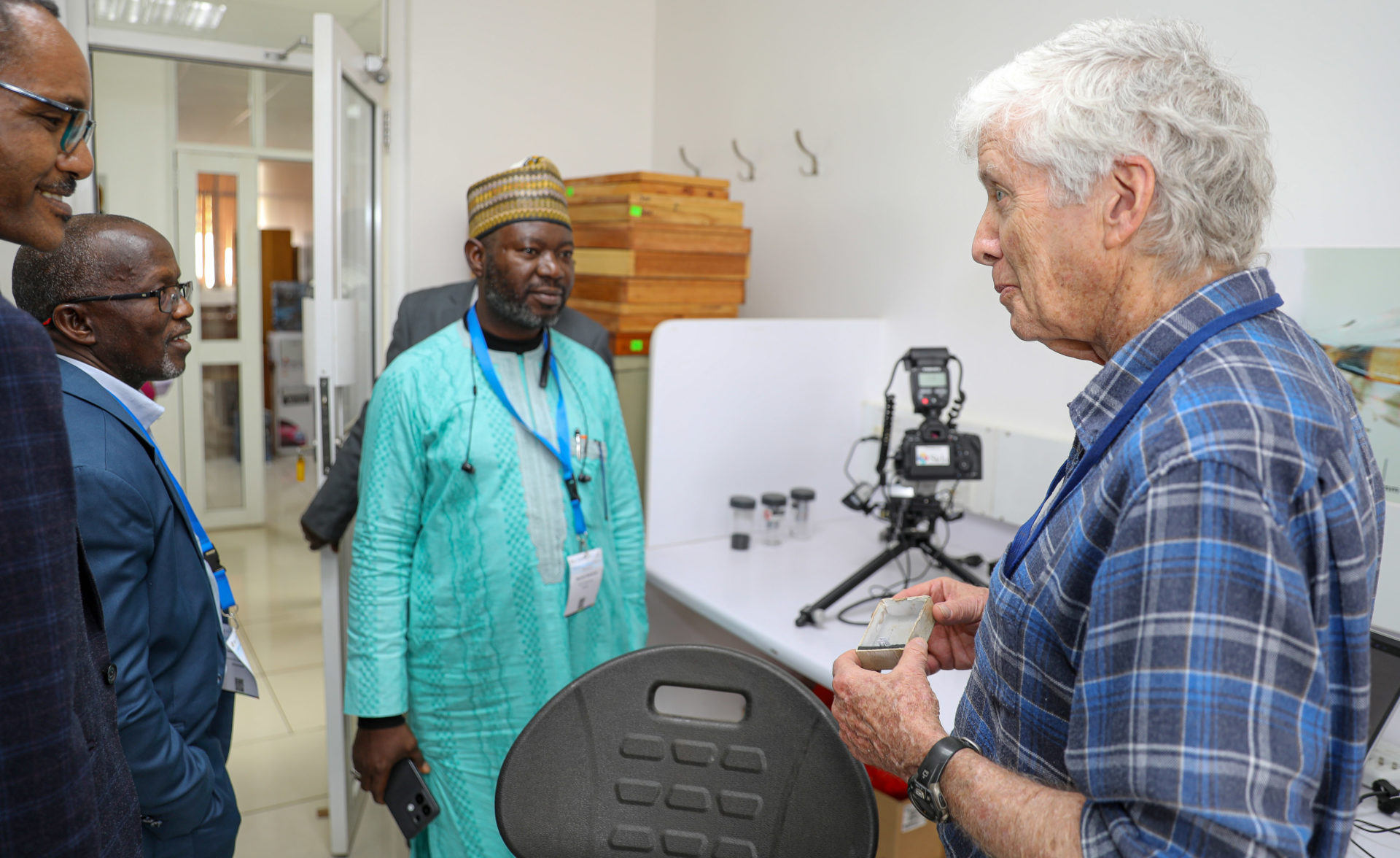
Biosystematics lab
Dr Robert Copeland, the acting head of the icipe Biosystematics Unit talks to the delegation at the lab. Photo/Brian Mwashi

The Vice Chancellors appreciated icipe’s intentional embedding of postgraduate students—both Master’s and PhDs—into research projects by Principal Investigators. This was highlighted as a best practice in capacity building, ensuring that young scientists gain hands-on research experience while contributing to impactful projects.

Overall, the visit gave the VCs more than a tour of the state-of-the-art labs, it offered them a blueprint of how African institutions can combine research excellence, innovation, and sustainability to deliver real-world impact.

Four African universities join Regional Scholarship and Innovation Fund (RSIF)


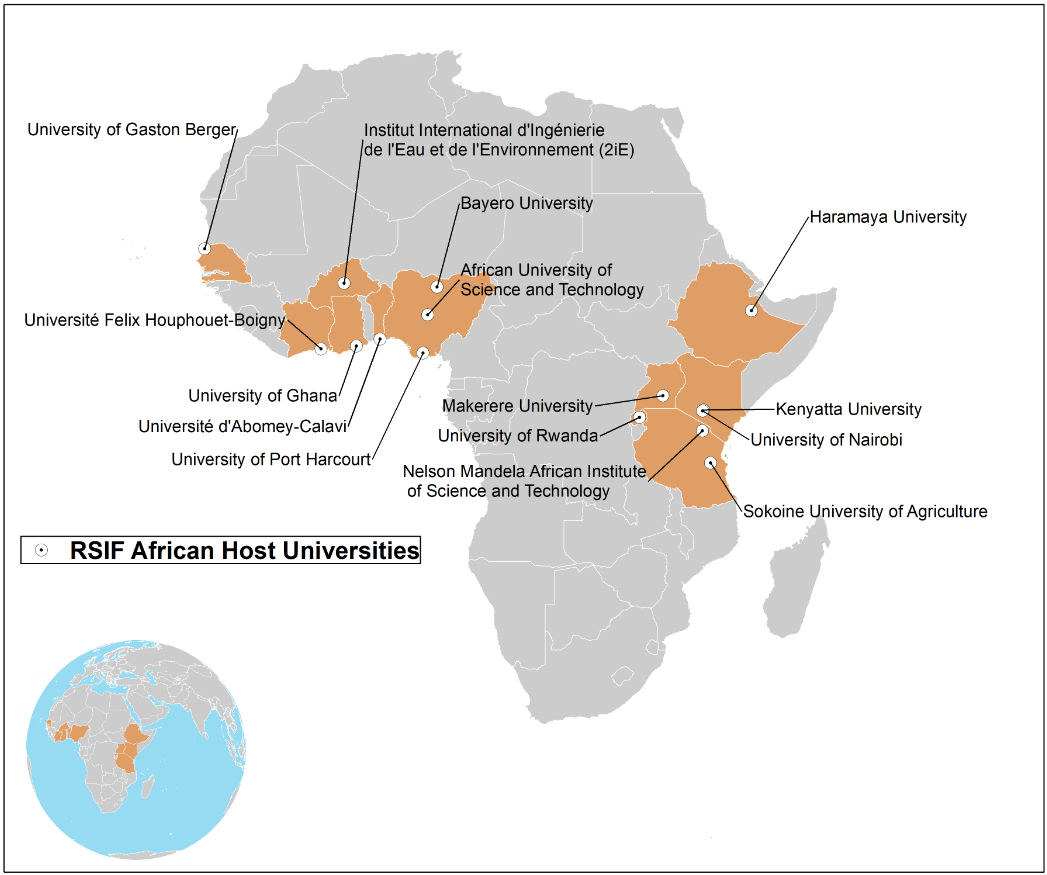
Four more universities have joined the Regional Scholarship and Innovation Fund (RSIF) as African Host Universities (AHUs), bringing the new total to 15. RSIF AHUs are universities or research institutes/centres (e.g. Africa Centers of Excellence) in sub-Saharan Africa that offer a strong PhD program in one of the priority thematic areas. Launched in 2017, RSIF is the flagship program for the Partnership for skills in Applied Sciences, Engineering and Technology (PASET), an African-led initiative with the goal of strengthening skills in the Applied Sciences, Engineering and Technology (ASET) to further socio-economic transformation in Sub-Saharan Africa (SSA).

RSIF focuses on transformative technologies that have a far-reaching positive impact on society. It supports PhD students, post-doctoral scientists and universities in SSA to establish high quality training, research and innovation environments and to develop institutional capacity for the benefit of the whole region. The four new RSIF host universities will host PhD students in RSIF’s fourth cohort, for which the competitive call for PhD scholarships is currently open until 30 September 2021.

2iE – International Institute of Water and Environmental Engineering is an international institute for education and research committed to covering areas of water, environment, energy, civil engineering, mining and managerial sciences through training of highly qualified and innovative entrepreneurial engineers in Africa. Located in Ouagadougou, Burkina Faso, the selected PhD program at 2iE is in Science and Technology of Water, Energy and Environment, in the African Centre of Excellence for Training and Research in Water and Environment Sciences and Technologies in West Africa (CEA-IMPACT 2iE).

Haramaya University  is a pre-eminent institution of higher learning in Dire Dawa, Ethiopia that have pioneered the field of agricultural sciences and the provisioning of the tripartite functions of education, research, and extension. The selected PhD programme at HU is in Climate Smart Agriculture and Biodiversity Conservation, under the Africa Center of Excellence for Climate Smart Agriculture and Biodiversity Conservation (ACE Climate SABC).

Makerere University (MAK), located in Kampala, Uganda, is one of the oldest and most prestigious English Universities in Africa, having been established in 1922 as a humble technical school. Committed to providing transformative and innovative teaching, learning and research responsive to dynamic national and global needs, the selected PhD programme at MU is in Plant Breeding and Biotechnology, within the Makerere University Regional Centre for Crop Improvement (MaRCCI).

The University of Abomey-Calavi (UAC) is the principal public university in the west African country of Benin. Composed of 19 institutions and six campuses, the selected PhD program is in Information and Communication Technologies of the Institute of Mathematics and Physical Sciences, African Centre of Excellence in Mathematical Sciences, IT and applications (SMIA).

Competitively selected by an independent, international panel of experts and endorsed by the PASET Executive Board, the other AHUs in the program include the African University of Science and Technology (AUST), Kenyatta University (KU) and The Nelson Mandela African Institute of Science and Technology (NM-AIST) in the Minerals, mining and materials engineering thematic area; Bayero University Kano (BUK), and University Félix Houphouët-Boigny (U-FHB) in the Climate change thematic area; University of Nairobi (UoN) and University of Port Harcourt in the Energy including renewables thematic area; Sokoine University of Agriculture (SUA) and University of Ghana (UG) in the Food security and agribusiness thematic area; University of Gaston Berger (UGB) and University of Rwanda (UR) in the ICTs including big data and artificial intelligence thematic area.

This increase in the number of host universities is a big step towards achieving one of the program’s objectives, which is to build African university capacity to provide relevant ASET training and to ensure continued investment in scaling up the ASET education and workforce by incorporating sandwich training options. The program also aims to build research excellence in ASET fields by developing the capacity for PhD training and undertaking applied research and innovation in partnership with a network of renowned International Partner Universities (IPIs) and strengthen research capacity regionwide by prioritizing the scholarships to African faculty that lack PhD training.

RSIF aims to support doctoral training and post-doctoral research and innovation in the five priority economic sectors for growth and development across Sub- Saharan Africa. The program uses scholarships together with research and innovation grants that improve the quality and relevance of the PhD programs to guarantee continuity and sustainability of research and innovations once the scholars graduate. RSIF is currently funded by African governments, the World Bank, the Government of Korea, and the European Union through the ACP Innovation Fund and managed by the International Centre of Insect Physiology and Ecology (icipe), Nairobi, Kenya, as the RSIF Regional Coordinating Unit (RCU). More funders and partners are invited to join the first Africa-led Pan-African science fund.